
Not too many years ago, the price of an encounter with either species was one of the three wishes we are supposedly granted in life. While encounters continue to be held in high regard, these days sightings are far more common as the diving world has, at least to some degree, learned where to go and what to do to swim with basking sharks and whale sharks.
According to historical records, encounters in California waters with the world’s second biggest fish, the basking shark were common as late as the 1980s. Aggregations with a dozen to as many as 40 to 50 sharks were often sighted and what was thought to be a sustainable fishery existed from the 1920s through the 1960s. But in the 1970s and 1980s, fishing pressure along the Pacific coast of North America dramatically increased and the basking shark population was quickly reduced to the degree that some feared these sharks would never again grace California waters.
However, within the last decade, the number of sightings of basking sharks in Califonia has been on the rise, giving hope that basking shark encounters for California divers will increase as well.
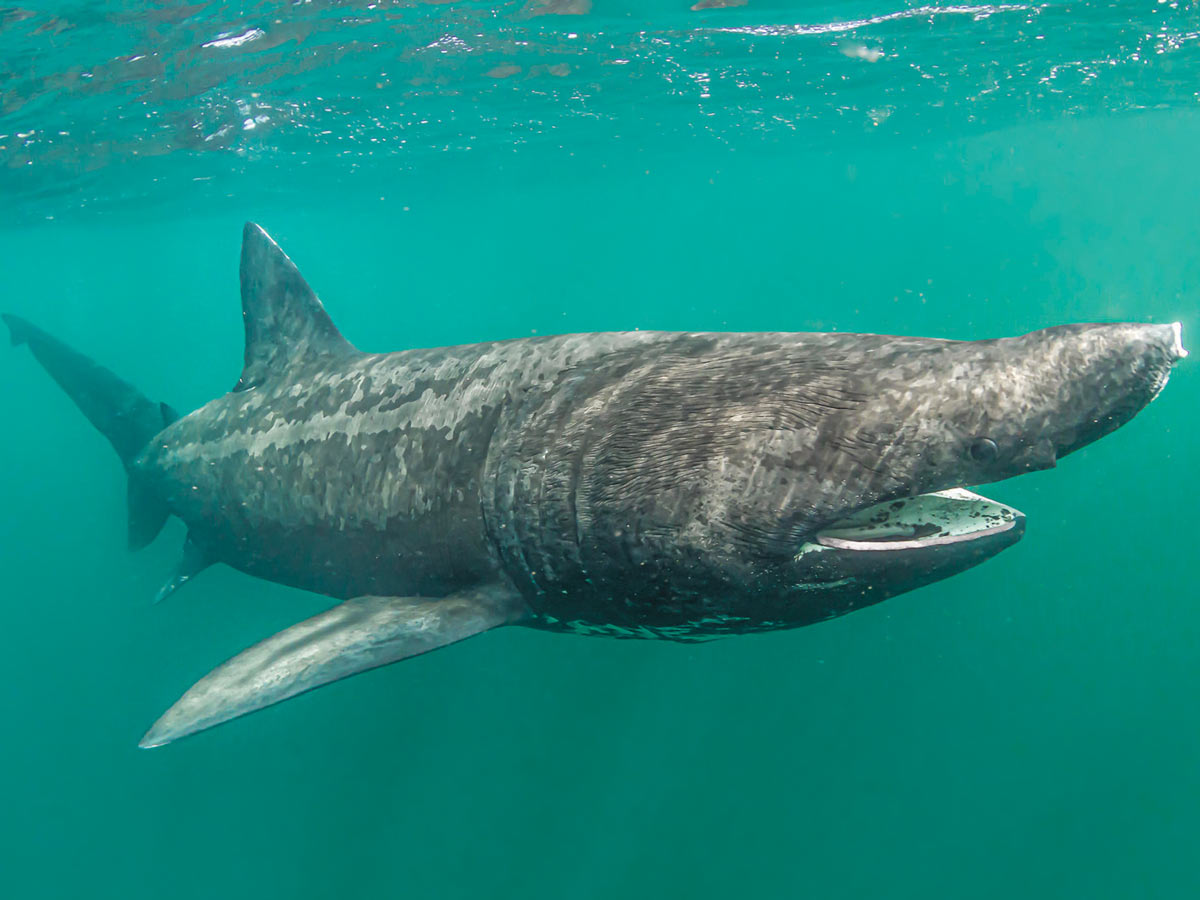
Basking sharks grow to 45 feet, although the length of a typical adult is 20 to 26 feet. An average adult weighs as much as 11,000 pounds. Photo by Marty Snyderman.
FAMILY
The basking shark is the only species in the family Cetorhinidae, a name derived from the Greek ketos meaning “marine monster” or “whale” and rhinos meaning “nose.”
GENUS AND SPECIES
Cetorhinus maximus