
Robots are playing other key roles in shedding light in dark places, after being deployed to survey a toxic waste dumpsite in high definition 3,000 feet (900 meters) below the surface. Robots also collected sediment and biological samples adjacent to six sunken barrels. The robots, autonomous underwater vehicles (AUVs), were deployed by a team of researchers from the Scripps Institution of Oceanography in partnership with NOAA.
The dumpsite surveyed is roughly 12 miles offshore of Los Angeles (the Palos Verde Peninsula) and eight miles from Catalina Island, both prime locations for recreational diving, boating and fishing.
Scientists have documented DDT in seafloor sediments, fish, birds, and marine mammals, including dolphins and sea lions, indicating that DDT moves from sediment and its communities into the water column food web. Exposure to legacy pesticides such as DDT, in tandem with a viral herpes infection, exposes sea lions to an aggressive urogenital cancer, according to a new study published in Frontiers in Marine Science. Synergism between viral infection and exposure to toxic chemicals increases cancer development odds. Additionally, brown pelicans are laying eggs with thin eggshells that are leading to the death of their chicks.
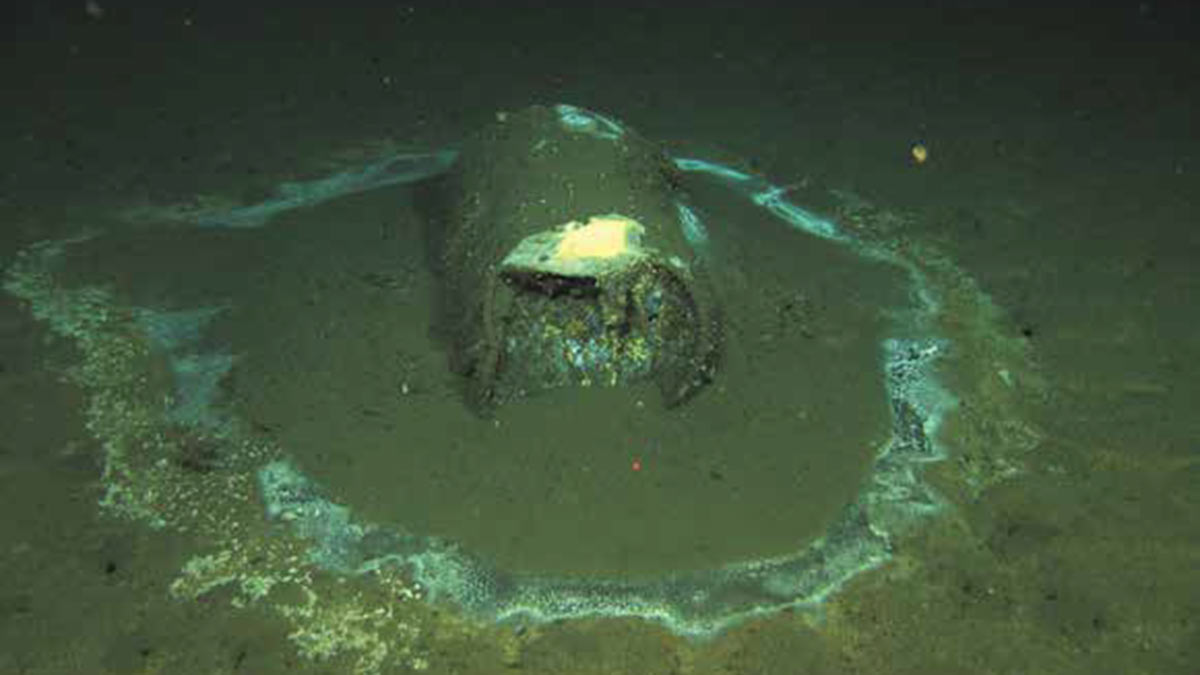
A barrel of DDT found off the coast of Santa Catalina Island at a historical dumpsite between the Palos Verde Peninsula and Catalina. Credit: David Valentine, UC Santa Barbara/RV Jason
The Dirt on DDT
Dichlorodiphenyltrichloroethane, DDT for short, is a tasteless, colorless and near odorless synthetic crystalline chemical compound originally developed as an insecticide. Because DDT is very stable it tends to persist in the environment, becoming concentrated in animals at the head of the food chain. DDT became infamous for its destructive environmental impact and its use is now banned in many countries.
Deep and Widespread Dumping of DDT
The tip of the DDT iceberg surfaced into public view in 2011 and 2013 when UC Santa Barbara professor David Valentine documented concentrated accumulations of DDT in seafloor sediments, and visually confirmed with underwater images decaying barrels on the seafloor.
In March 2021, an expedition led by the Scripps Institution of Oceanography, in collaboration with NOAA’s Office of Marine and Aviation Operations and the National Oceanographic Partnership Program, mapped more than 36,000 acres of the seafloor of the San Pedro Basin, in a region found previously to contain high levels of DDT. Two robotic AUVs, the REMUS 6000, capable of depths up to 19,600 feet (6,000 meters), and the Bluefin, capable of depths up to 4,900 feet (1,500 meters), were deployed in tandem to map the seabed floor at a high resolution.
The survey, conducted onboard the Research Vessel Sally Ride, identified more than 27,000 possible barrels, and a total of more than 100,000 debris objects. “Unfortunately, the basin offshore Los Angeles has been a dumping ground for industrial waste for several decades, beginning in the 1930s,’’ said Eric Terrill, chief scientist of the expedition and director of the Marine Physical Laboratory at the Scripps Institution of Oceanography. “Now that we’ve mapped this area at very high resolution, we are hopeful the data will inform the development of strategies to address potential impacts from the dumping.” The expedition team included 31 scientists, engineers and crew conducting around-the-clock operations.
In August 2021, during another Scripps expedition aboard the Schmidt Ocean Institute’s R/V Falkor, researchers assessed the biodiversity in an area rich in minerals that are of interest to deep sea mining engineers, and also explored the DDT dumpsite with robots, collecting sediment and biological samples around six barrels to assess the potential ecological effects of the dumpsite and to determine the level of DDT in the ecosystem.
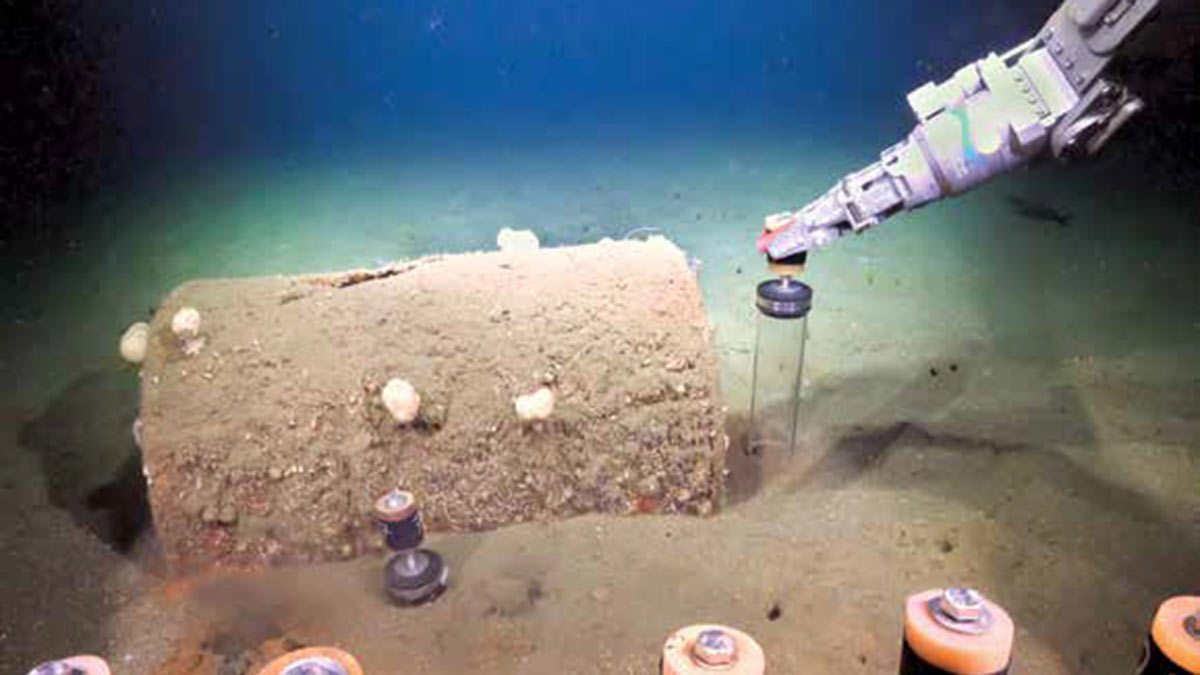
Researchers use Remotely Operated Vehicle (ROV) SuBastian to collect sediment push cores and record video footage, data that will be used to add to the assessment on how this stretch of deep sea is responding to DDT. The science team is conducting research on the DDT dumpsite off the coast of Los Angeles where barrels of chemicals were dumped from 1947 to 1982. Credit: Schmidt Ocean Institute.
Record Contamination Levels
The deep ocean basins off the coast of Los Angeles have long been historical dumpsites for DDT and other hazardous industrial waste. The Montrose Chemical Corporation of California was the largest producer of DDT in the US, from 1947 until it stopped production in 1982. Improper disposal of chemical waste from DDT production resulted in serious environmental damage to the Pacific Ocean near Los Angeles. The former main plant, near Torrance, was designated as a Superfund cleanup site by the EPA. A $140-million Superfund battle in the 1990s exposed decades of environmental abuses, including disposing of toxic waste through sewer pipes that poured directly into the sea, and deploying waste haulers to ocean dumpsites.