
FAMILY
Phocedai
GENUS
Phoca
The Atlantic harbor seal, also known as harbour or common seal in Europe, is the same species as the Pacific harbor seal, Phoca vitulina.
The southern elephant seal, Mirounga leonina, is the largest marine mammal that is not a whale. A male southern elephant seal is about 40 percent heavier than a male northern elephant seal. The southern male weighs up to nearly 9,000 pounds (4,000 kg) and reaches lengths of almost 19 feet (5.8 m). Females are much small, weighing up to 2,000 pounds (900 kg) and reaching lengths of a little over 9 feet (3 m).
RANGE
Atlantic harbor seals range from the northern Atlantic to the Baltic and North seas. In North America they can be found from Canada and Greenland to New York. Some wander as far south as Florida.
Southern elephant seals, which spend most of their lives at sea, feed on the edge of the Antarctic continent.
HABITAT
Southern elephant seals come ashore to remote breeding colonies in subantarctic waters, from South Georgia, the Falklands and Argentina to South African islands in the subantarctic Indian Ocean, and subantarctic islands in the Pacific Ocean south of Tasmania and New Zealand.
FUN FACT
Individual harbor seals possess a unique pattern of spots, either dark on a light background or light on a dark background.
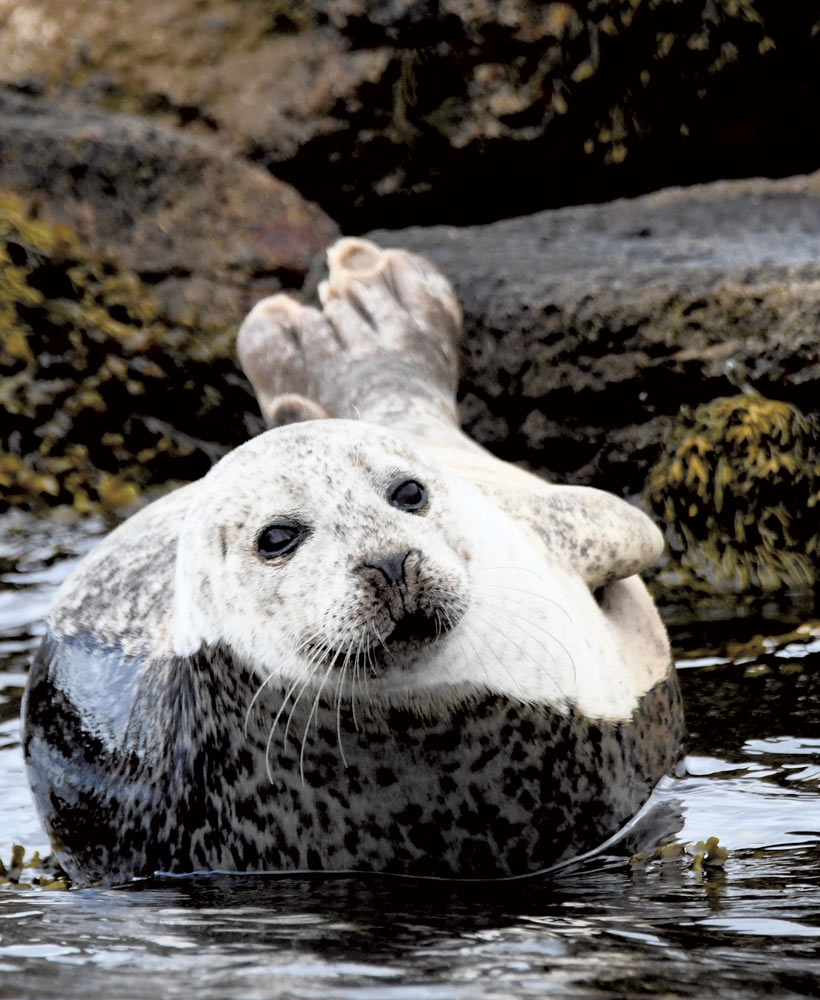
Atlantic harbor seal, Portree, Isle of Skye, Scotland. Photo by Karen Straus.
Other Potential Seal Encounters
MONK SEAL: The Hawaiian monk seal, Monachus schauinslandi, and the Mediterranean monk seal, Monachus monachus, are the only true seals found in tropical waters. Monk seals are thought to be named for a fold of skin that resembles a monk’s cowl, or because of their habit of being alone or in small groups, or because of the short hairs on their head, said to resemble a monk’s. Its Hawaiian name, Ilio-holo-i-ka-uaua, means “dog that runs in rough water.”