
Citizen science is a term that describes the public voluntarily participating in the scientific process. These volunteers work with scientists to identify research questions, collect and analyze data, interpret results, make new discoveries, develop technologies and applications, as well as solve complex problems. This work also goes by other names such as “community science” or “participatory science.”
In a 2022 survey by The Reef-World Foundation, 82% of divers across the globe said they would like further education on protecting marine life while on vacation. The results are hardly a surprise, as the diving community is among the most environmentally conscious groups of people in the world.
Read on for an introduction to a variety of NOAA and partner citizen science projects for divers in the underwater environment, as well as about volunteer opportunities on land.
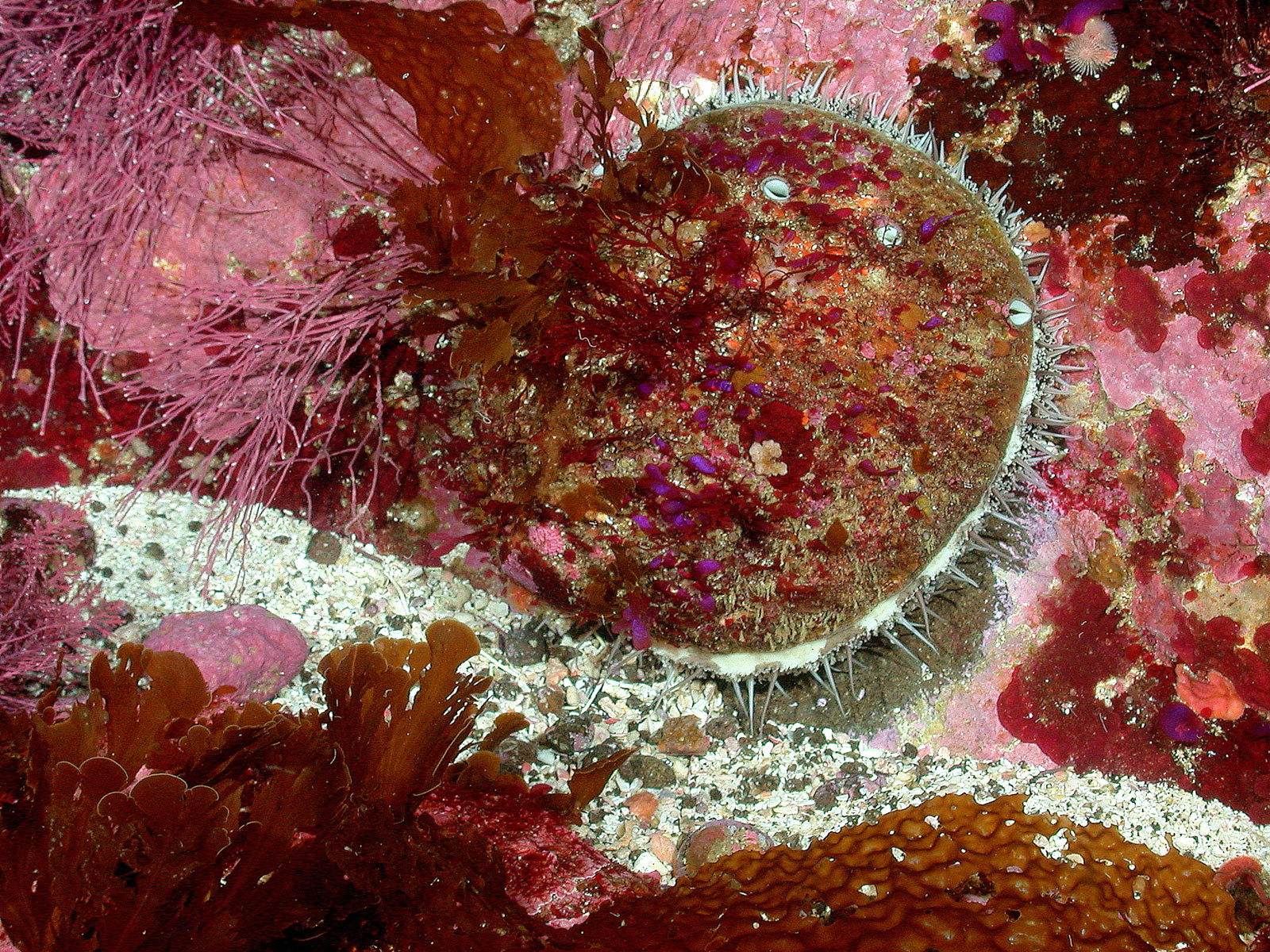
White abalone, found in NOAA’s Channel Islands National Marine Sanctuary, was the first invertebrate (animal without a backbone) to be listed as endangered. Closely related to snails, this species is most threatened by overfishing. Photo Credit: NOAA
We Want You To Find Hal
NOAA and partners are looking for Hal—Haliotis sorenseni, that is. Haliotis sorenseni or the white abalone is on the brink of extinction, and your observations could contribute to the conservation of this endangered species. Divers are encouraged to keep an eye out for white abalone on their recreational dives. You can use our ID cards to see different abalone species and help NOAA positively identify white abalone.
If you spot what you suspect is a white abalone, stop and look for beige tentacles and tissues with three to five open pores. The next step is to take photographs of the abalone, and in an ideal scenario, you would include a scale bar in the photo. It is important to not touch the abalone. Direct contact can cause undue harm to the animal, and this species is critically endangered. Take note of the location of the suspected white abalone on the rocky reef and record the latitude and longitude of the dive site. Document the depth and habitat features, noting if the abalone was on a rock, in a crevice, and/or with algae. White abalone tend to be found in 30-60 feet of water, but they can be shallower or deeper. When your dive is over, be prepared to share your observations with NOAA by recording the details on the Finding Hal website. Finding these critically endangered abalones in the wild is vitally important, and NOAA will send you a cool reward for submitting your observations.
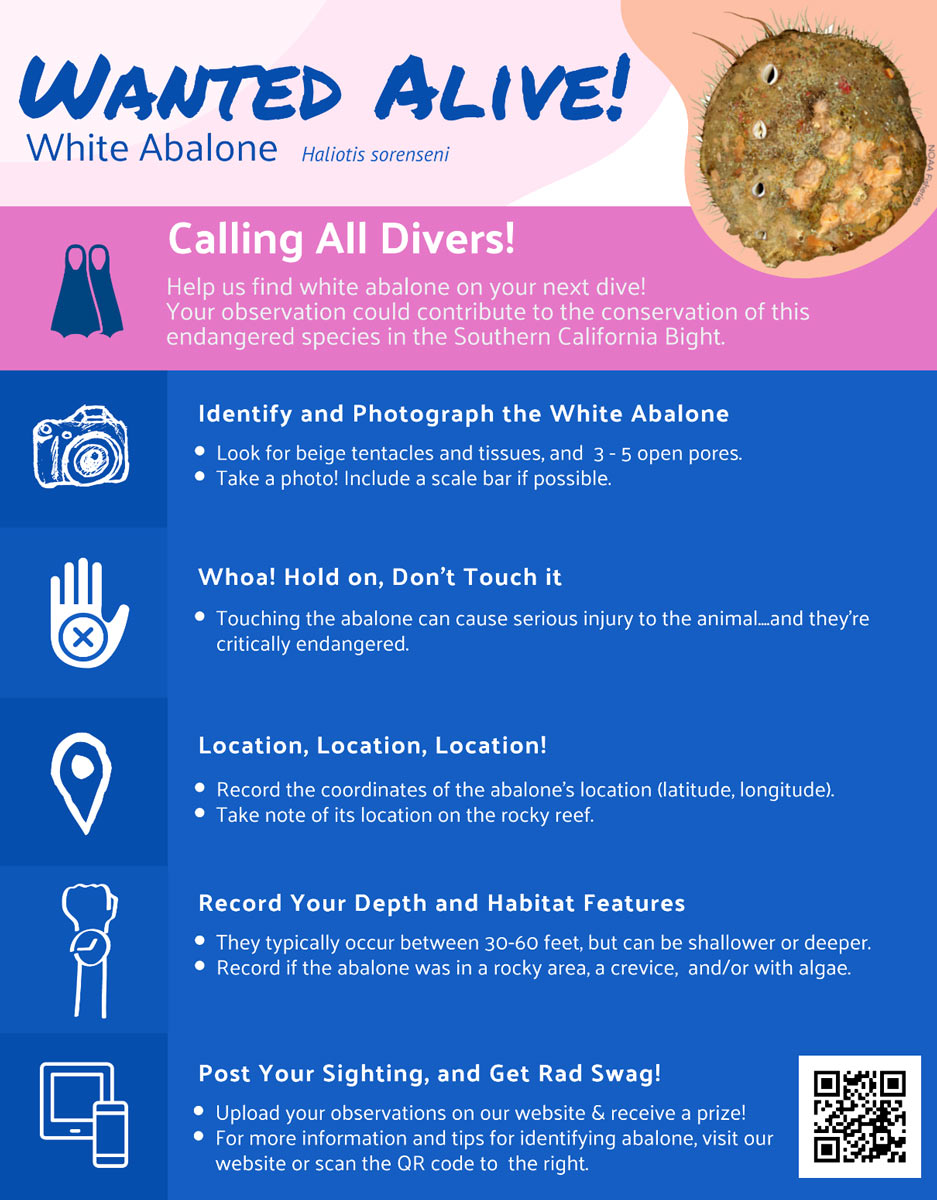
A poster from the Finding Hal website with a snapshot of what you should do if you find a white abalone while diving. Credit: NOAA
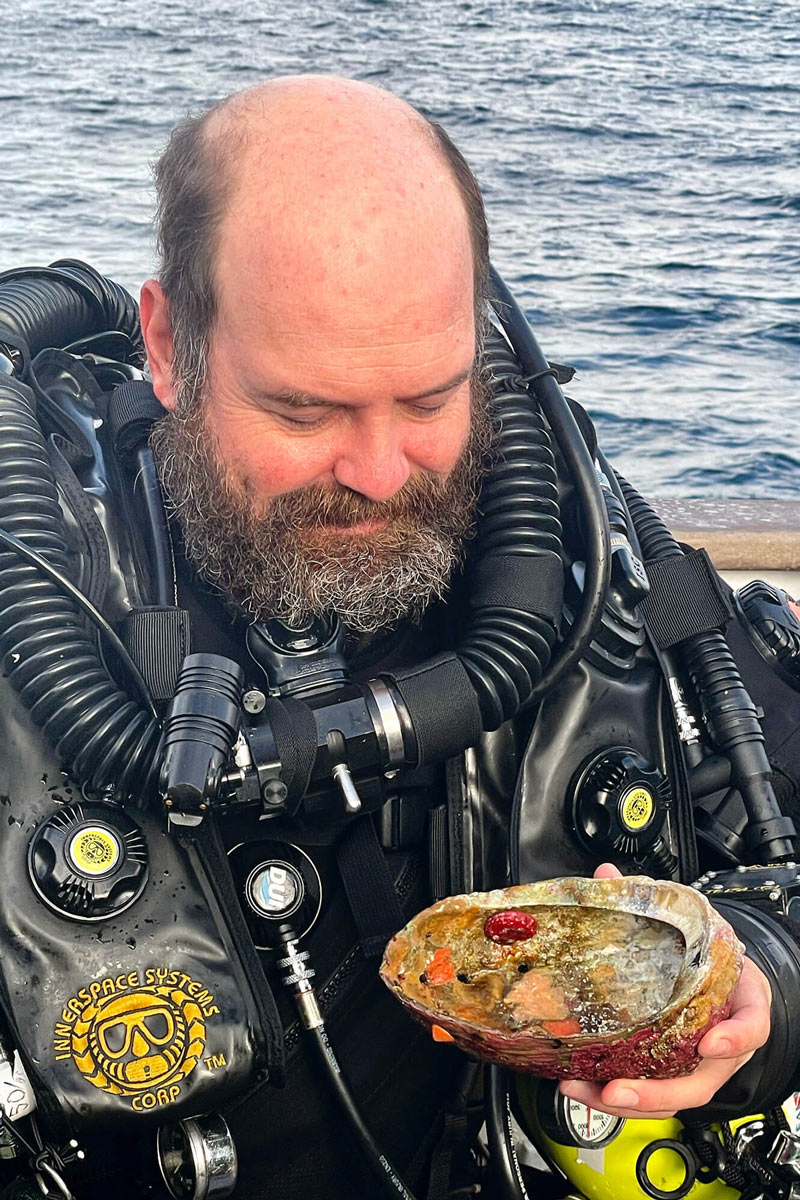
NOAA Diving Program Manager Joe Hoyt from the Office of Marine and Aviation Operations holds an empty white abalone shell with a juvenile white abalone–the small reddish bump–inside. The abalone was returned to the ocean. Credit: NOAA Fisheries
Tracking Marine Invasives
A large number of marine algae species have been unintentionally introduced to California waters. When these non-native species become widespread and abundant, they can be a nuisance—or worse—to native species and may turn invasive and dangerous to established native populations. Monitoring these invasive species is crucial for effective management and to prevent their spread.
The two species of invasive algae that are currently being tracked in Southern California are Sargassum horneri and Undaria pinnatifida.
Sargassum horneri is often called “devil weed” by Southern California boaters and divers. This brown seaweed is native to Japan and Korea and was first detected by biologists in California in 2003, likely hitchhiking on a commercial vessel. This invasive algae has spread from Long Beach Harbor to Baja, Mexico, and throughout the Channel Islands, taking over areas that once were dominated by native kelp. (Read more on devil weed in the May 2024 California Diving News marine life column.)