
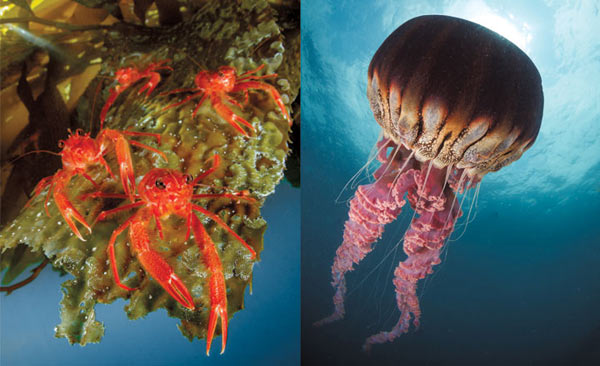
 It’s happened to all of us. We’re flipping through a magazine or scrolling through social media, and BAM, there it is — an amazing underwater creature, an unbelievable event — something we absolutely must see for ourselves. We plan trips, expensive ones, hoping to witness these things for ourselves. And then we arrive all excited, cameras ready, only to encounter sketchy weather, poor visibility or “invisible” marine life.
My husband has a saying: The ocean is not a zoo. And I have to agree — experience has demonstrated this cruel truth again and again. But there are certainly ways to maximize success in the hunt for… well, pretty much anything.
What I’m talking about is using a targeted-approach to maximizing your marine encounters. The prospect might seem daunting, especially when travel is involved, and it’s certainly easiest to sign up for the first subject-specific trip you see advertised, but what if you don’t know anything about the trip organizers? Worse yet, what if no one has an organized trip? That’s okay. With a bit of perseverance, some research, and a flexible timeline and mindset, these guidelines may help you to get close to your underwater obsession in no time, organized trip availability notwithstanding.
Local Knowledge
It’s only natural to be obsessed with a creature that can be found off of the beautiful California coast, since we are lucky enough to have access to some of the most incredible marine life and underwater vistas on the globe. And you may even be able to view your subject with minimal time and effort.
Ask around about the object of your obsession. If it’s an offshore creature, get in touch with local freedivers or offshore charter operators. If it likes the kelp forest, then contact divers who frequent those sites regularly. If it’s a sand dweller, then speak with instructors or shore divers who are commonly visiting shore sites with sandy sea floors.
In some cases, getting a glimpse of your subject may be a simple matter of joining local email listserves (Divebums and OC Diving are my Southern California favorites) and keeping your eyes open for the latest dive reports. If something pops up that grabs your interest, it is often quite easy to get more information. These communities are filled with active local divers who are enthusiastic about our local dive sites and ocean inhabitants, and you can generally find someone who is willing to share knowledge or even to buddy up with you.
Understand Your Subject
First off, I’m sorry to say that you’re gonna have to get a little science-y. The Internet is helpful here as well (preferably biology-based sites), as are ID books. Search out details of your subject: what does it eat? What type of habitat does it prefer? What time of year does it spawn or mate? Is it social or solitary? Is it more active during a particular time of day? Does it tend to be more common at a certain water temperature or during a particular season?
Clearly, this step can get a bit nitpicky, but it might help you narrow down the best way to execute your plan — and it might give you an idea about the type of diving you’ll be doing so you can make sure you’re properly trained and geared up.
Be Flexible
I am asked most commonly about uncommon local subjects or subjects that tend to be around for only a few days. The advice I always give is to try to keep a free vacation day or two on tap for this purpose. When you hear that something spectacular is happening, make every effort to get out and see it immediately. And to be perfectly frank, a midweek dive to view a newly reported creature might be a lot more pleasant (from a diver-density perspective) than a weekend one.