
The mere mention of an upcoming trip to a tropical destination will almost certainly capture the attention of California divers. The warm, clear, seas alive with the tropical jewels found in flourishing coral reef communities can seem like another world to those whose typical diving buddies are garibaldi and California sea lions swimming in the often greenish waters of giant kelp forests where colder water requires an accessorized 7mm wetsuit or a drysuit. While those are some of the obvious differences between kelp forests and coral reef communities, there are also a number of significant similarities. Let’s dive in and take a look around!
DESCRIPTION
When you slip below the waves on a day with favorable conditions, you enter a world where shimmering rays of sunlight magically dance through a towering golden forest. Eye-catching fronds stand out against a beautiful background of blue-green water while the undersea forest rhythmically sways back and forth in perfect synchrony with the water’s ebb and flow.
In addition to their stunning beauty, California’s kelp forests are among the most productive ecosystems in the world. They serve as homes, places to hide, attach, and rest as well as sources of food, breeding grounds, and nurseries for many species.
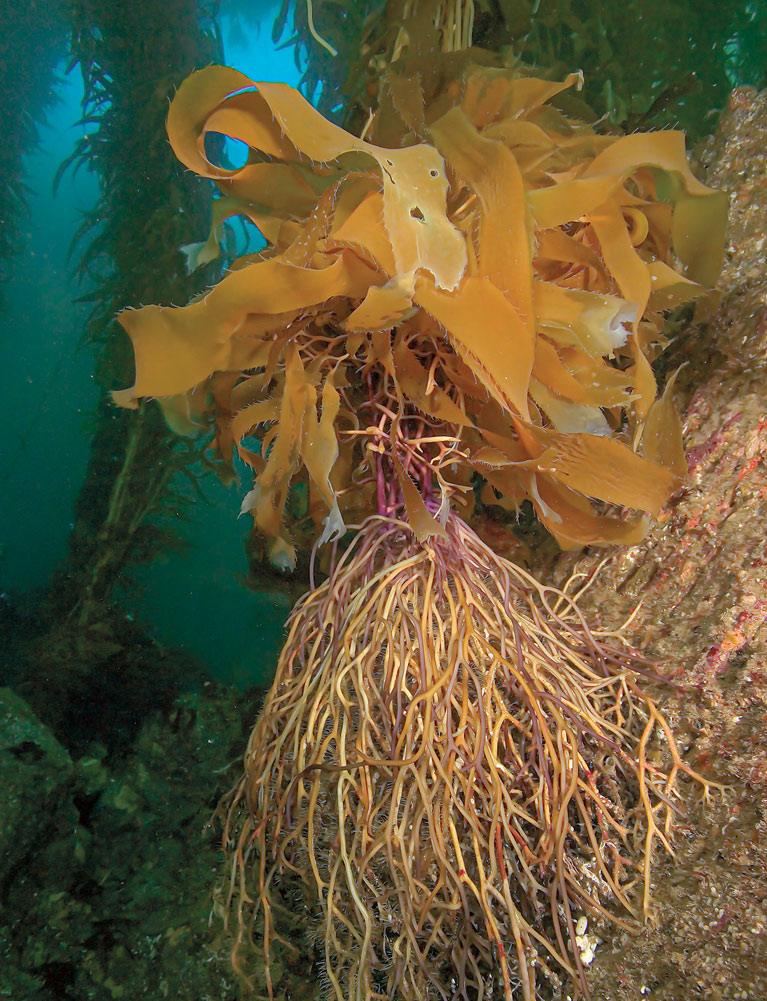
A holdfast of giant kelp anchors the frond to the substrate.
TAXONOMY
Giant kelp (Macrocystis porifera) is a species of brown algae, not a plant. Worldwide there are many species of kelps. All are restricted to cold water climates that hold the rich supply of nutrients they need to flourish.
RANGE
Giant kelp occurs from Santa Cruz, California to Turtle Bay, Mexico.