
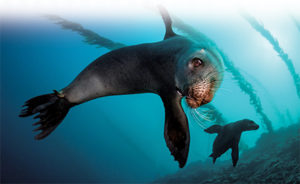
It’s not unusual for beachgoers to see California sea lions stranding this time of year as one-year-old animals wean from their mothers and strike out on their own in search of food. But the increased number of starving young sea lions is of particular concern given what National Marine Fisheries Service observers, including animal care specialists from the Marine Mammal Center, saw during a recent assessment of the population.
Dramatic influxes of starving young sea lions in the past have been driven by intense swings in ocean conditions such as those observed during the El Niño Southern Oscillation and the “the Blob” of 2015.
This year’s El Niño conditions are not nearly as extreme as seen previously, but experts say even weak patterns have potential to tip the ocean off-kilter, especially when compounded by the effects of warming waters worldwide, which has made the ocean environment increasingly unpredictable.
Domoic Acid Outbreak
It’s not only young and malnourished sea lions that are being affected by these changing ocean conditions. Dozens of adult and sub-adult California sea lions have stranded over the last few weeks displaying neurological abnormalities and seizures, reliable signs of domoic acid poisoning.
“We’re still in the thick of this outbreak, and we may continue to see the impacts of this bloom for months to come,” says Dr. Cara Field, Staff Veterinarian at The Marine Mammal Center in Sausalito.
Domoic acid is a neurotoxin produced by certain algae during harmful algae blooms (sometimes known as “red tides”). The severity and production of blooms is complex, but often changes with water temperature and available nutrients. This neurotoxin accumulates over time in small fish, which are then eaten by sea lions and other marine animals in large quantities. Exposure to the toxin causes sea lions to become lethargic, disoriented and have seizures similar to epilepsy in humans.
Humans who eat seafood contaminated with domoic acid can also experience a life-threatening condition known as amnesic shellfish poisoning as well as gastrointestinal upset.
Experts report toxic algal blooms are active in several counties and the California Department of Public Health has issued a shellfish safety notification for mussels, clams and scallops. To obtain the most accurate information on shellfish advisories and quarantines, phone the California Department of Public Health’s toll-free Shellfish Information Hotline at (800) 553-4133 or visit cdph.ca.gov.